Visual Clutter & Performance



SCROLL
The Hardware: Atari 2600
- Released: 1977 (The iconic 8-bit home arcade console).
- CPU Speed: 1.19 MHz (Over 1,000x slower than modern smartphones).
- Memory: 128 Bytes of RAM (Very limited memory space).
- Display: 160×192 pixel resolution with 128 retro colors.
Experimental Design & Data Collection
 Game Logs
- Data Source: 20 full Space Invaders game sessions from Atari-HEAD.
- Key Information: Game frames, action timing, player scores, and eye movements.
 Data Cleaning
- Filtering: Removed broken frames and timing glitches (≥ 5,000 ms).
- Clean Records: 332,462 total decision points analyzed.
 Enemy Count
- Estimating Aliens: Tracked alien count using point rewards (55 down to 1).
- Wave Resets: Each wave starts with 55 aliens and resets when cleared.
 Reaction Metrics
- Standard Timing: Measured typical decision speed vs 50 ms baseline.
- Action Shifts: Measured exact timing when players changed moves.
Study Overview: What We Discovered
- Research Goal: Find out if visual clutter (more aliens) slows down player decision speed.
- Baseline Rhythm: Standard player decisions happen every 50 ms (~3 game frames).
- Key Finding: Players take slightly longer to change moves during high clutter (81 ms vs 76 ms).
- Main Conclusion: Busy screens cause brief decision delays when changing actions, but basic gameplay flow stays steady.
Game Clutter Levels
We grouped 332,462 game decision points into three screen clutter levels based on the number of aliens remaining on screen:
High Clutter
37–55 Aliens (124K Decisions)
Medium Clutter
19–36 Aliens (113K Decisions)
Low Clutter
1–18 Aliens (94K Decisions)
Key Findings: Decision Speed vs Screen Clutter
- Standard Speed: A 50 ms decision interval dominates overall gameplay.
- Action Changes: Average time when changing moves is 81.1 ms (High Clutter) vs 76.7 ms (Low Clutter).
- Decisions > 50 ms: About 21% of decisions take longer than 50 ms across all clutter levels.
- Takeaway: Screen clutter causes a small decision delay, but player strategy and bullet speed also matter.
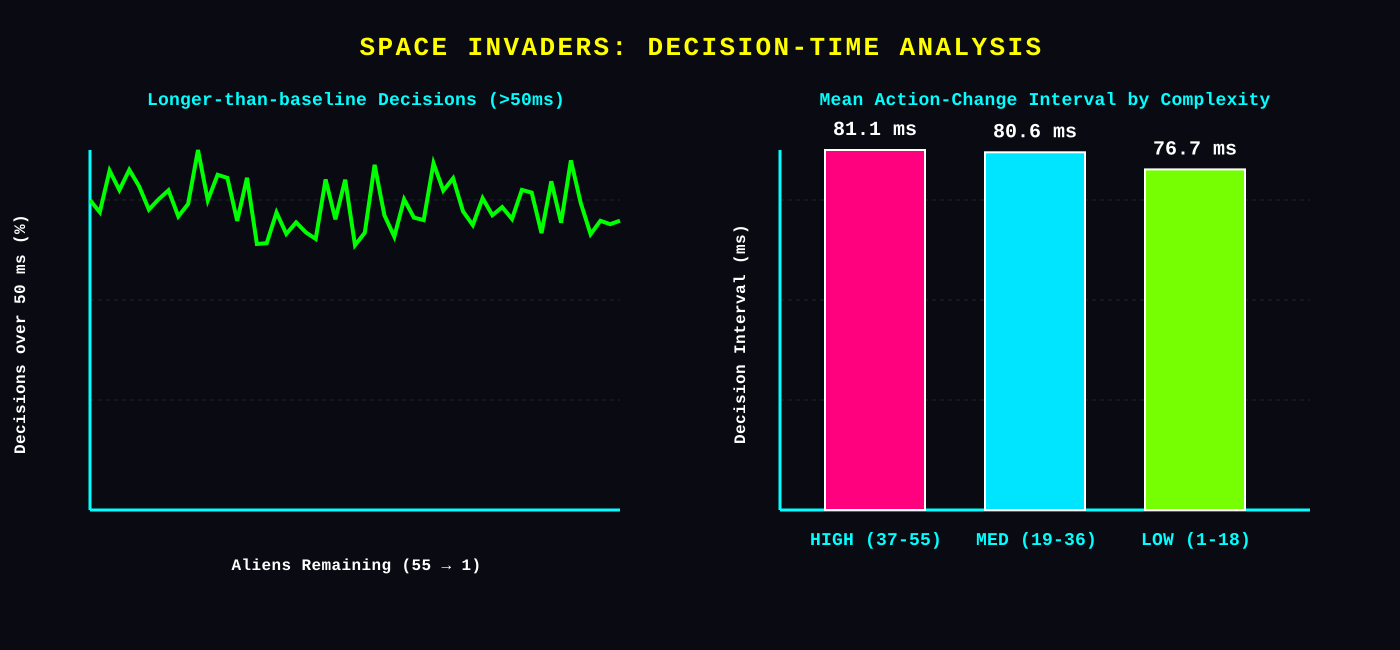
DECISION SPEED SUMMARY
Baseline decision speed stays locked at 50ms, while changing moves shows a slight hesitation delay of 81.1ms (High Clutter) vs 76.7ms (Low Clutter).
Study Limitations
- Inferred Alien Count: Alien numbers were estimated from score points rather than camera detection.
- System Hardware Timing: Recorded times include game emulator speed alongside human brain reaction.
- Future Improvements: Combine eye-tracking gaze data with AI object tracking for deeper insights.
Enough reading. Grab the joystick.